
Many American libraries exist today because of Andrew Carnegie. In fact, he funded four of the original Spokane Public library buildings which formed the foundation of the library system you know and love. This year, we are reflecting on the impact of Andrew Carnegie on our nation’s libraries and celebrating receipt of a grant from the Carnegie Corporation of New York.
Who was Andrew Carnegie?
Andrew Carnegie was a steel magnate who amassed a fortune in the late 1800s. In June of 1889 he wrote an essay titled “The Gospel of Wealth.” In this essay, he called on the rich to use their wealth to improve society. Carnegie proposed that the best way to address wealth inequality was for the wealthy to “use their surplus means responsibly and thoughtfully.” During the last 18 years of his life, he gave away $350 million dollars (equivalent to $6.9B in today’s dollars).
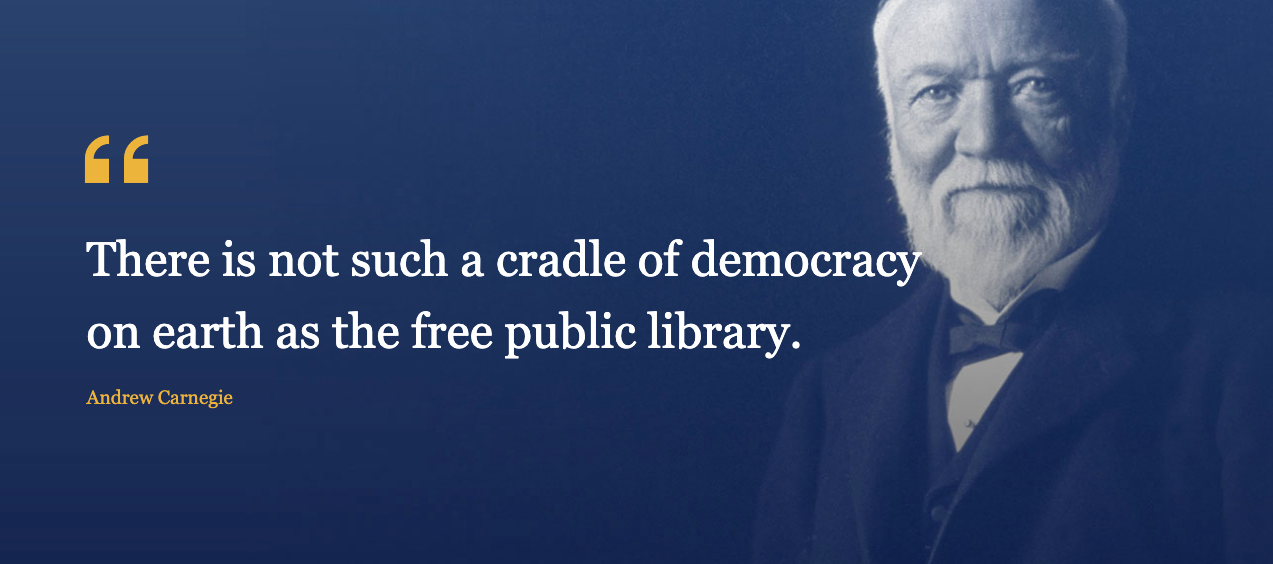
Much of the focus of his charitable giving was the establishment of libraries. He believed that public libraries are a never-ceasing foundation of good. He described libraries as ‘cradles of democracy’ that ‘strengthen the democratic idea and the equality of the citizen.”
Between 1883 and 1929, Carnegie funded the construction of more than 1,600 libraries across the country, creating the framework for the modern American library system. While none of our current libraries are housed in Carnegie buildings, Andrew Carnegie’s donations formed the foundation for the Spokane Public Library.
The Early History of Spokane Public Library
The Spokane Public Library system began to take shape in 1891 when it opened with a membership fee. In 1894, the City of Spokane took over the library, removed the membership fee, and the library became a free public library supported by taxes.
By the early 1900s, the library needed more space, and Spokane sought the assistance of Andrew Carnegie to fund the construction of a new library. In total, carnegie gifts amounting to $155,000 funded four libraries in Spokane. In today’s dollars, that’s equivalent to nearly $6 million.
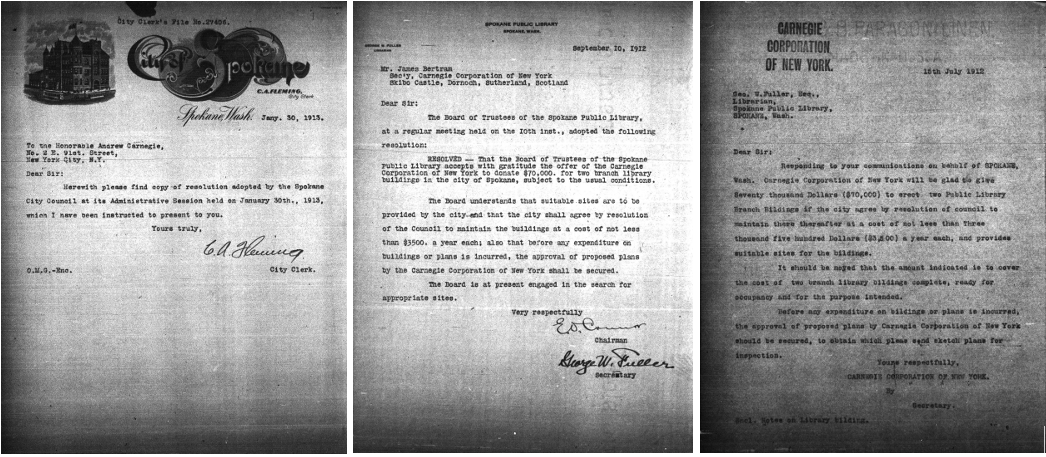
Above: Scans of correspondence between the City of Spokane, Spokane Public Library, and Carnegie Corporation of New York from the early 1900s.
Spokane’s First Libraries
Spokane received two Carnegie grants about a decade apart. These funds built four libraries in Spokane.
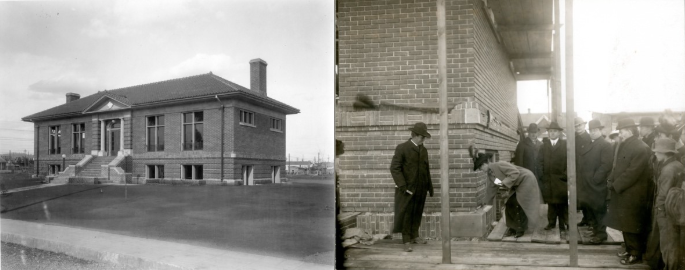
In 1903, Spokane requested and received $85,000 to build the Main Library at 10 S Cedar Street. Spokane resident AB Campbell (you may know of him from the Campbell House at the Northwest Museum of Arts and Culture) donated the land. This library operated between 1905-1962, then the library moved to the current location on the corner of Lincoln and Main in the Sears Comstock Building (the current building was constructed on this location n 1994, thanks to a voter-approved bond).
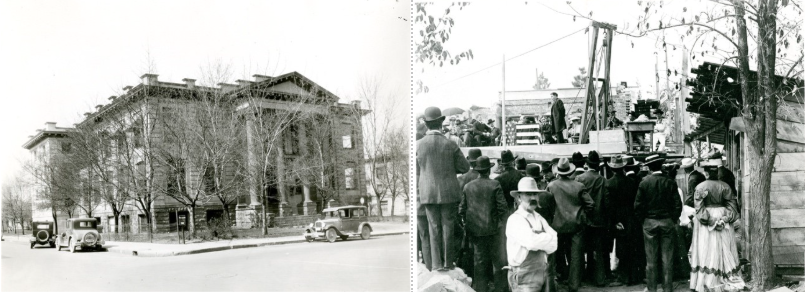
Left: Main Library located at 10 S Cedar; operated between 1905-1962. Right: The laying of the cornerstone on September 12, 1904.
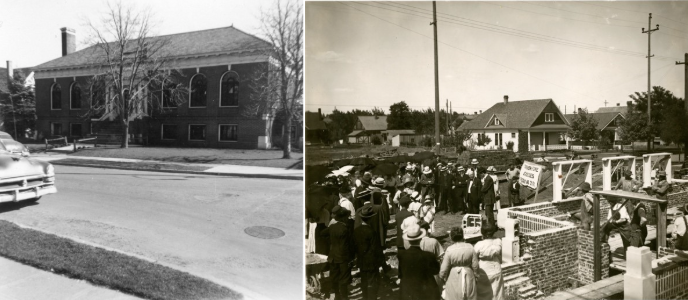
By the 1910s, Spokane was growing and needed more library services. The library board sent another request to Andrew Carnegie, requesting funds for three more libraries. In 1912, Carnegie donated an additional $70,000 to build three more libraries: the Heath Branch, the Eastside Branch, and the North Monroe Branch.
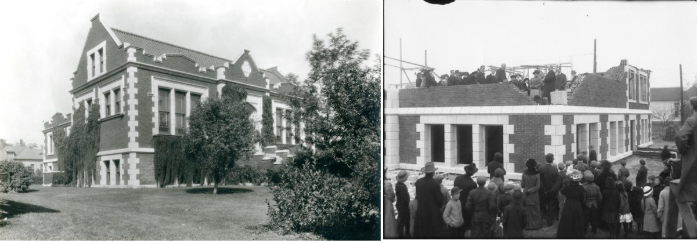
Left: Heath Branch located at 525 E. Mission; operated between 1914-1983. Right: The laying of the cornerstone of the Heath Branch on November 6, 1913.
Left: East Side Branch at 25 S Altamont; operated between 1913-1954. Right: The laying of the cornerstone November 19, 1913.
Left: North Monroe Branch at 925 W Montgomery; operated between 1914-1964. Right: The laying of the cornerstone of the on June 30, 1914.
Through an interactive map created by the Carnegie Corporation of New York, learn more about the 1,681 Carnegie Libraries that were built in the United States and access the foundation’s archival records for each location.
Spokane’s Carnegie Buildings Today
Spokane Public Library no longer operates out of these original Carnegie libraries, but they still stand and hold offices for businesses in our community. Fun fact: Integrus Architecture, the firm behind several of our new innovative library spaces, is headquartered in Spokane’s original Carnegie Library at 10 S. Cedar Street. Integrus designed many of our modern award-winning libraries, including The Hive, Hillyard Library, and Liberty Park Library—a meaningful connection between Spokane’s library history and its future.
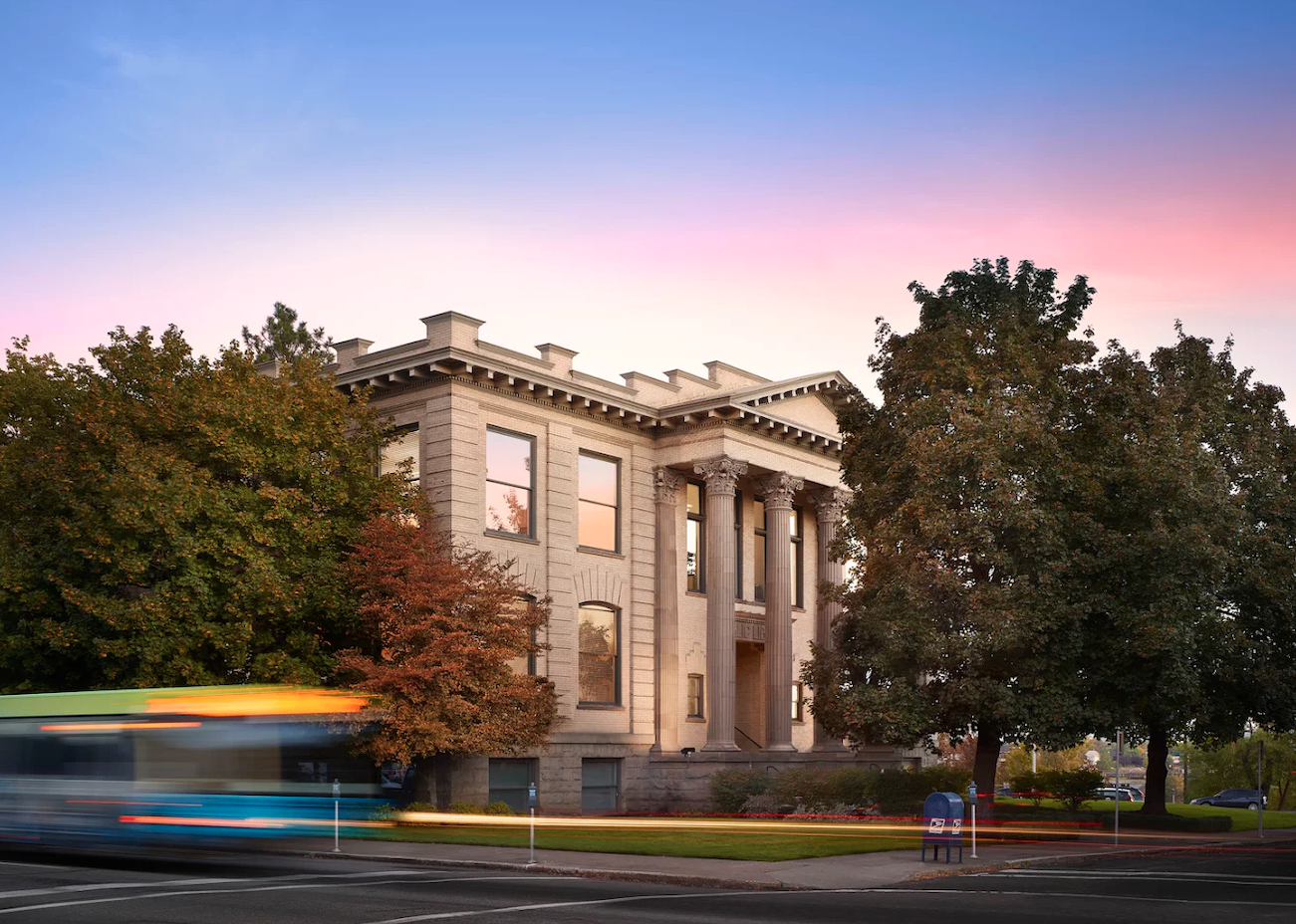
Above: Main Library at 10 S Cedar is now offices for Integrus Architecture. (Photo: Integrus Architecture.)
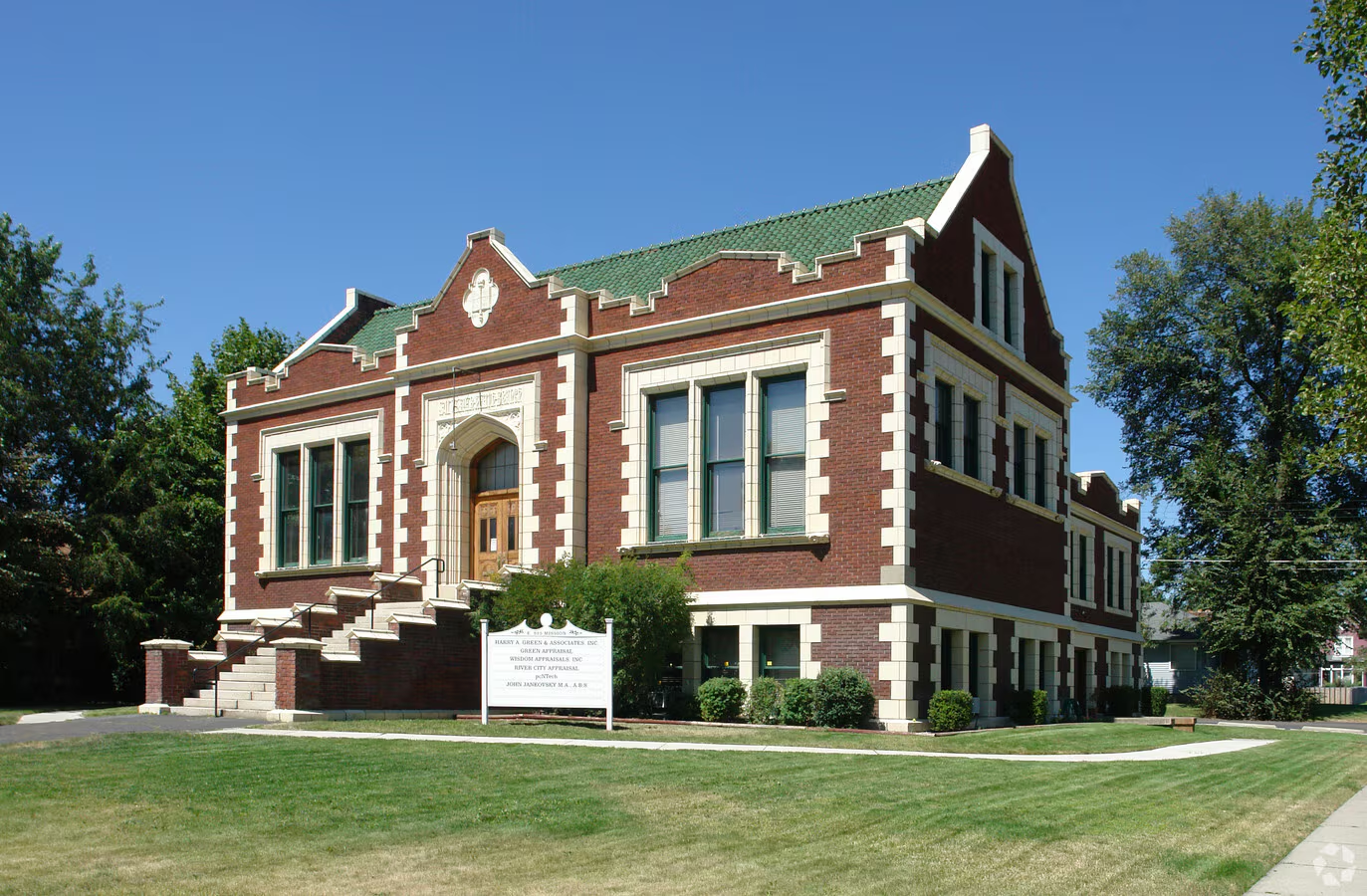
Above: Heath Library at 525 E Mission is now offices for the Catholic Dioceses. (Photo: Google Street View.)
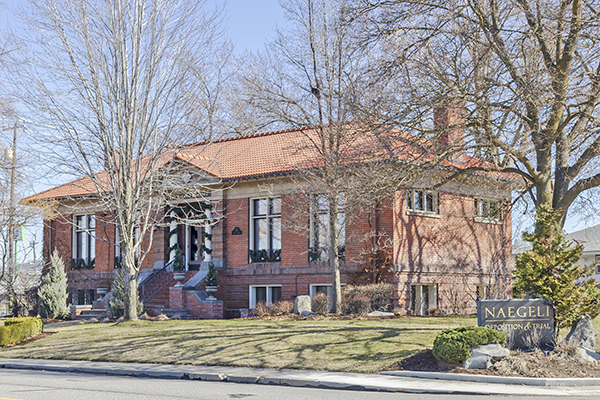
Above: East Side Library at 25 S Altamont is now Naegeli Law Offices. (Photo: Google Street View.)
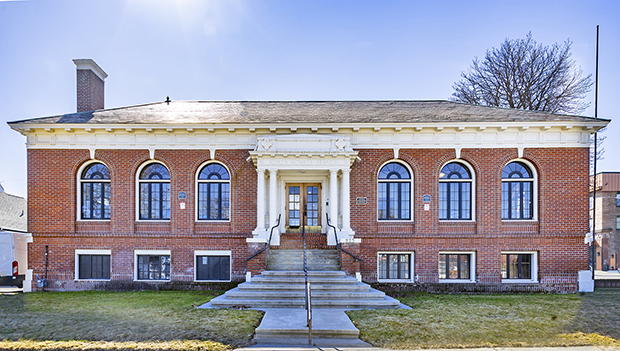
Above: North Monroe at 925 W Montgomery is now the office for International Rescue Committee. (Photo: Google Street View.)
Celebrating Carnegie’s Legacy Today
Carnegie’s legacy shaped the foundation of our nation’s libraries and cultural institutions, and his impact is still felt today. In fact, this year Carnegie Libraries across America (including Spokane Public Library) each received a $10,000 gift from Carnegie Corporation of New York, the foundation established by Andrew Carnegie. The award is part of Carnegie Libraries 250, a special initiative celebrating the upcoming 250th anniversary of the signing of the Declaration of Independence.
This grant will be used to further develop the local archives in the Inland Northwest Special Collections.
Many of the photographs, letters, and historical materials featured here are preserved in the Inland Northwest Special Collections at Central Library. The collection contains thousands of archival items documenting Spokane’s history, including materials related to Spokane Public Library, local neighborhoods, businesses, community organizations, and everyday life in the Inland Northwest.